Crucifix In a Deathhand
By Charles Bukowsi
yes, they begin out in a willow, I think
the starch mountains begin out in the willow
and keep right on going without regard for
pumas and nectarines
somehow these mountains are like
an old woman with a bad memory and
a shopping basket.
we are in a basin. that is the
idea. down in the sand and the alleys,
this land punched-in, cuffed-out, divided,
held like a crucifix in a deathhand,
this land bought, resold, bought again and
sold again, the wars long over,
the Spaniards all the way back in Spain
down in the thimble again, and now
real estaters, subdividers, landlords, freeway
engineers arguing. this is their land and
I walk on it, live on it a little while
near Hollywood here I see young men in rooms
listening to glazed recordings
and I think too of old men sick of music
sick of everything, and death like suicide
I think is sometimes voluntary, and to get your
hold on the land here it is best to return to the
Grand Central Market, see the old Mexican women,
the poor . . . I am sure you have seen these same women
many years before
arguing
with the same young Japanese clerks
witty, knowledgeable and golden
among their soaring store of oranges, apples
avocados, tomatoes, cucumbers –
and you know how these look, they do look good
as if you could eat them all
light a cigar and smoke away the bad world.
then it’s best to go back to the bars, the same bars
wooden, stale, merciless, green
with the young policeman walking through
scared and looking for trouble,
and the beer is still bad
it has an edge that already mixes with vomit and
decay, and you’ve got to be strong in the shadows
to ignore it, to ignore the poor and to ignore yourself
and the shopping bag between your legs
down there feeling good with its avocados and
oranges and fresh fish and wine bottles, who needs
a Fort Lauderdale winter?
25 years ago there used to be a whore there
with a film over one eye, who was too fat
and made little silver bells out of cigarette
tinfoil. the sun seemed warmer then
although this was probably not
true, and you take your shopping bag
outside and walk along the street
and the green beer hangs there
just above your stomach like
a short and shameful shawl, and
you look around and no longer
see any
old men.
The Purse-seine
By Robinson Jeffers
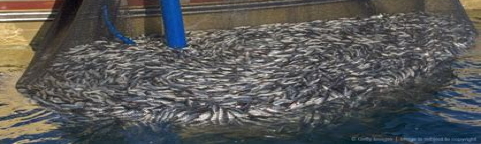
Our sardine fishermen work at night in the dark
of the moon; daylight or moonlight
They could not tell where to spread the net,
unable to see the phosphorescence of the
shoals of fish.
They work northward from Monterey, coasting
Santa Cruz; off New Year’s Point or off
Pigeon Point
The look-out man will see some lakes of milk-color
light on the sea’s night-purple; he points,
and the helmsman
Turns the dark prow, the motorboat circles the
gleaming shoal and drifts out her seine-net.
They close the circle
And purse the bottom of the net, then with great
labor haul it in.
I cannot tell you
How beautiful the scene is, and a little terrible,
then, when the crowded fish
Know they are caught, and wildly beat from one wall
to the other of their closing destiny the
phosphorescent
Water to a pool of flame, each beautiful slender body
sheeted with flame, like a live rocket
A comet’s tail wake of clear yellow flame; while outside
the narrowing
Floats and cordage of the net great sea-lions come up
to watch, sighing in the dark; the vast walls
of night
Stand erect to the stars.
Lately I was looking from a night mountain-top
On a wide city, the colored splendor, galaxies of light:
how could I help but recall the seine-net
Gathering the luminous fish? I cannot tell you how
beautiful the city appeared, and a little terrible.
I thought, We have geared the machines and locked all together
into inter-dependence; we have built the great cities; now
There is no escape. We have gathered vast populations incapable
of free survival, insulated
From the strong earth, each person in himself helpless, on all
dependent. The circle is closed, and the net
Is being hauled in. They hardly feel the cords drawing, yet
they shine already. The inevitable mass-disasters
Will not come in our time nor in our children’s, but we
and our children
Must watch the net draw narrower, government take all
powers–or revolution, and the new government
Take more than all, add to kept bodies kept souls–or anarchy,
the mass-disasters.
These things are Progress;
Do you marvel our verse is troubled or frowning, while it keeps
its reason? Or it lets go, lets the mood flow
In the manner of the recent young men into mere hysteria,
splintered gleams, crackled laughter. But they are
quite wrong.
There is no reason for amazement: surely one always knew
that cultures decay, and life’s end is death.
Listen! Make It Rain
with affection and gratitude toward Charles Bukowski and Robinson Jeffers
(1978 to 2018, and falling)
You walk down toward the waterfront
Carrying your 22-ounce craft beer:
Bottled treasure from 2000 miles away.
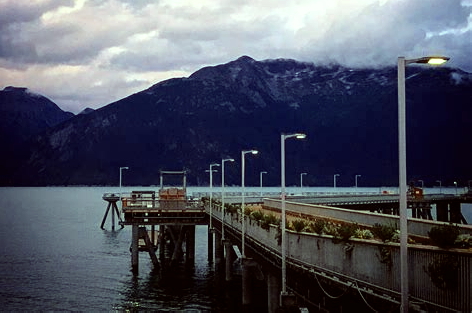
You go out onto the end of the brand-new pier
Squeezing through the locked gate and past the signs that say
Entry Beyond Constitutes a Breach of Security
(Breach of Security — a newly molded sin
Compliant with the age and clime…)
Sitting behind the slight wind-break of a metal post
Where it juts up from concrete bulwark,
Almost out of the sifting misting rain
Coming and going from fragmenting cloud,
It is a luxury of a kind.
You rest there with your refreshment,
Looking out across the foreshore and the saltwater beyond at half-tide.
The light wind carries the smell of blown rain and salt air
Mixed with tar, creosote, and the spunk of flotsam and jetsam
Flung up by recent ardent storm-tides:
Decaying crab, seaweed torn free at the holdfast,
Broken shells, waterlogged driftwood.
You’ve known these things before
And you will know these things again:
The restless and quarrelsome gulls and crows
Picking through what has been cast up for treasure,
And the lone Raven flying by,
Looking for meat and hazed off
By the boldest crows and gulls.
And further off, eagles, national symbol
Of a kleptoparasitic sovereignty,
Huddled on the gravelly sand at the edge of the water,
Too lazy to steal anything with all the fish waste about,
Hunched and waiting or waddling down to the water’s edge
To haul something helpless onto the low sand–
Dead or dying, it doesn’t matter which…
Except for white heads and tails,
And their occasional movement,
These birds could almost blend into the low ground
Like the small boulders left sticking up
Out of the sand and gravel of the wide beach
By long-vanished glaciers.
You tilt the last of the beer into your mouth
With the bottom of the bottle raised high,
And then you wing it down over the edge of the pier
Where it falls into shallow water and sand
And the ghosts of other peoples’ cast-offs
Sometime since cleaned up and cleared away after years of slow decay;
Cleared to make way for proper appearances
And the visiting dollar.
You probably shouldn’t do that,
Not for the wrong reasons.
But the bottle didn’t break, and besides,
Made of glass it will be sunk and beaten back and forth
By wave action,
And return, mineral-to-mineral, sand-grain-to-sand-grain,
The glass becoming over time what it once was.
You recognize you will be long gone by then.
After awhile, it’s time to climb down and walk the beach.
Unlike places you’ve been before,
Where the original people look so grown into the place
It’s as if they emerged out of the ground there,
Here, even the human inhabitants with the longest imprint of presence–
In their time, conquering and enforcing claims of ownership until they were
In turn displaced–
Appear as if they could be
In a moment
Shrugged off the landscape along with everything else;
With almost no sign anyone was here at all.
How much more so, then, the come-lately homeowners,
With their tract houses, shiny rigs, market values, runways
And other artifacts of public utility and private property?
A landslide could erase it all,
Or a seismic wave, or economic collapse,
And the only remains would be briefly scarred ground
And a few objects of obscure origin
To be quickly covered by the progress of seasonal rains,
Runoff wash, encroaching vegetation and further slides and spills.
“Does anyone like us belong anywhere,” you wonder.
No one is so unwelcome strange
To these new strangers of this town
As a seasonal visitor or volunteer or worker
Without the means to buy in,
Who won’t move on with the changing season.
So what if they’re someone who’s been knocking around the area
For longer than most?
(So if you head out at all, you’ll have to go soon.
There’s a hitch in the conversation like a cough,
Or an ache in the side.)
Something like this can be seen in the contending weather, even:
Less and less unusual summer-like warmth
–Carrying way, way late into the Fall–
And the usual rains,
By turns put forth competing claims.
You are sometimes comforted and sometimes worried that the water’s edge
Now falls each Spring a little less than it will rise.
This is something we are doing on our own hook–
Or rather, those of us in places to make these choices for everyone.
The birds you’re watching (and many others besides)
Will adjust as conditions change;
Most will be living here for a time come what may.
A part of what you’re feeling arises
From the thought that there will be soon no one
Around to look at these mountain-tops
And slopes down-falling into the inland sea
To see not just what is, but what about it invokes
Longing that’s itself its fulfillment.
The Orca, the Hump-back, the Sea-lion,
The Bear, the Eagle, the Raven, the Salmon,
The Red Squirrel…
These Crows and Gulls, the Herons and Murrelets,
The Thrushes, Sparrows, Kinglets, Sandpipers
Voles, Weasels, Otters, Hare…
These and others among all the non-human beings
Living here, from their place in it,
See and hear and smell and know the place clearly.
Yet, they all know it in terms of immediate
And pressing demands of feeding and breeding.
Our kind’s much-vaunted humanity, such as it is,
Proves to be little different most of the time,
Except to carry the possibility (however dormant)
To step back from all that
And to look with different eyes.
(Most don’t, believing in permission.
Of those who do, many go misrepresented, even punished.)
This northern landscape of long fjords,
Of deglaciated or avalanche-disturbed ground,
Renders the progress of succession plainly stark:
Weedy pioneer plants grow up on barren ground
And change it so that they can no longer themselves live there,
And so find their legacy in the conditions they leave
For their replacement.
Some of their seed is carried by wind, or water,
Or the feet and guts of animals, and goes to colonize
Newly disturbed ground elsewhere.
And so their kind, too, lives on because
Every place they can get to is not a locale
Already filled up with impossible disturbance,
Or a scene of past disruption, now overgrown:
Some well-covered ground, presently out-of-bounds to them
Will sometime, someplace
Again be opened by catastrophe.
(Meanwhile, if everything, everywhere were
Turned all the same, could they last long?)
You stop and look back at the town
In the long twilight,
Now lit up along every street
And alongside every building.
Very little of what was here before
Remains in the widening spread of pavement,
Concrete foundations, gravel parking areas,
And the green desert of lawn.
Until our kind’s collective activity creating our own
Colonizing habitat grew so great
As to even force the air,
It could be said our spread into our own disturbance
Too, was held in check.
Now, though, those white mountain snowfields
And the glaciers, and the icefields beyond them
Are likely to be gone in a short chain of human lifetimes.
These lowering cloud claimed thoughts
Turn your footsteps back toward your battered car.
You would dispel this mood by getting out your rod for a little fishing.
As you take out your rod and tackle, you kick the car,
But you know you’re really kicking yourself
For the part you’re playing in all of this.
You would like to think this, too, is an instance of succession,
Wherein the good you know is not to become all lost,
But you realize within the grief the fear
That things have gone too far for your kind, and for much else.
All but the most vulnerable of the other beings here
Might carry on for a good while,
Even if in the end most of them cannot.
Life itself can expect another 800 million years
Until the Sun’s heat sterilizes the globe and boils the water away,
But withal, it would be good to find assurance
Some better part of your own kind would, or could,
Also go on and grow not simply ever more numerous and grasping,
But into something else.
Enough of this!
On the beach, you find a small piece of viscera
To take from a dead fish for bait,
And you climb up and back out onto the pier
To let your line down.
It’s a cross-quarter phase of the moon,
So the tides are not extreme,
And there’s water enough to fish from the pier,
Legal or not,
And just enough time and concealment before full dark.
Conditions aren’t perfect,
but you might catch a sole for supper,
And for now, that will have to do.
 This One & This One